MassHealth: The Basics – Facts and Trends (July 2019)
This UPDATED (July 2019) edition of the MassHealth: The Basics chart pack provides new data on MassHealth enrollment and spending from the most recent state fiscal years available, as well as a high-level overview and status update on the state’s delivery system reform efforts. The 2019 chart pack features a summary of the program’s impacts on access to care and health outcomes and new data highlighting the role of MassHealth in supporting the low-income workforce. The chart pack provides comprehensive yet accessible data points and updates on the complex MassHealth program that will be useful to policymakers and administrators, as well as advocates and academics.

Some of the key information from the 2019 chart pack -- which is organized under three sections, Eligibility and Enrollment, Spending and Cost Drivers, and Reforms -- includes:

  • MassHealth enrollment has been relatively stable for the past four years (2015-2018), hovering just above 1.8 million members. Notably:
    • More than 4 in 10 children in Massachusetts are MassHealth members; and
    • More than three quarters of non-elderly MassHealth members live in working families.
  • MassHealth represents a significant portion of the state budget, but the majority of its spending is paid for with federal funding, and spending growth has moderated in recent years as enrollment has leveled off.
    • From 2013-2016, prescription drugs and home- and community-based long-term services and supports (LTSS) were the key drivers behind per-enrollee spending growth in MassHealth.
  • MassHealth’s delivery system reform changes are well underway. Status updates are included on major initiatives:
    • Newly formed Accountable Care Organizations, which began full operation in March 2018, now have over 890,000 MassHealth members enrolled.
    • Launch of the Community Partners and Flexible Services programs to improve integration of behavioral health, LTSS, and social services.
    • Expansion of coverage for outpatient, residential inpatient, and community services to combat the substance use disorder crisis.

The chart pack is made available in PDF and PowerPoint formats to facilitate its use in presentations. A webinar to review this updated chart pack was held on October 29, 2019. A recording of that webinar is available here.
Collection

What is the Actual State Cost of MassHealth in 2019?

Among state budget items, MassHealth is well known as one of the largest spending categories, while its role as a significant source of federal revenue is often overlooked. This brief takes a look beyond the budget totals to help stakeholders better understand the actual state cost of MassHealth when factoring in the state and federal partnership that finances this program. In fiscal year (FY) 2019, the state projects it will spend approximately $16.7 billion on MassHealth. This total (or “gross” amount) is approximately 36 percent of total estimated state spending for FY 2019. However, because the federal government reimburses Massachusetts for more than half of its MassHealth spending, the state’s actual cost for MassHealth (“net of”—or minus—federal revenue) is $8.3 billion or 24 percent of total state spending in FY 2019. Fully understanding the actual state cost of MassHealth requires appreciating the details of the federal and other revenue sources that support this essential and comprehensive program.

Collection

CHIP Reauthorization Update: Congressional Inaction Puts States in Limbo

Federal authorization for the Children’s Health Insurance Program (CHIP) expired on September 30, 2017. Senators Orrin Hatch (R-UT) and Ron Wyden (D-OR) have filed a bill to extend CHIP for five years, but Congress did not act quickly enough to prevent the current authorization from expiring. Unspent federal CHIP funds may be carried over into the next fiscal year and Massachusetts’s current allotment of federal CHIP funds should allow the state to continue to use CHIP funds for benefits until early 2018. However, we have now entered a policy limbo in which states are hopeful for reauthorization but must also determine other coverage options for children if funds run out.

As follow up to the Foundation’s June report, The Importance of CHIP Reauthorization for Massachusetts, this brief provides an update on the status of federal reauthorization for CHIP and a summary of its potential impact on the program in Massachusetts.

MassHealth: The Basics (September 2017)

UPDATED (September 2017) chart pack produced by the Massachusetts Medicaid Policy Institute (MMPI), a program of the Blue Cross Blue Shield of Massachusetts Foundation, in partnership with the Center for Health Law and Economics at the University of Massachusetts Medical School. This updated edition includes MassHealth enrollment as of May 2017 and spending from state fiscal year 2016. It is made available in PDF and PowerPoint formats to facilitate its use in presentations.

The Foundation hosted a webinar with author Bob Seifert from the Center for Health Law and Economics, University of Massachusetts Medical School to review the updated summary data on MassHealth enrollment and spending on Wednesday, October 11, 2017. Click here to access the webinar materials.

Collection

The Importance of CHIP Reauthorization for Massachusetts

This report describes the Children’s Health Insurance Program (CHIP) in Massachusetts and its role as part of MassHealth. Though there is no expiration date for CHIP in federal law, Congress has authorized funding of the program through September 30, 2017. Without Congressional action, a majority of states, including Massachusetts, will exhaust their current federal CHIP allocation by March 2018. This report discusses the importance of CHIP and the broader health policy debate, including reauthorization, now taking place in Washington.

The MassHealth Waiver 2016–2022: Delivering Reform

This issue brief describes the key elements of the most recent MassHealth 1115 waiver extension, including the shift to a delivery system centered on Accountable Care Organizations and Community Partners, a Delivery System Reform Incentive Program, the redesigned Safety Net Care Pool, and the expansion of services for treatment of substance use disorders. It concludes with a discussion of implications of the new system for major stakeholder groups.

UPDATED MassHealth: The Basics (June 2016)

UPDATED (June 2016) chart pack produced by the Massachusetts Medicaid Policy Institute (MMPI), a program of the Blue Cross Blue Shield of Massachusetts Foundation, in partnership with the Center for Health Law and Economics at the University of Massachusetts Medical School. This updated edition includes MassHealth enrollment as of January 2016 and spending from state fiscal year 2015 and is made available in PDF and Power Point formats to facilitate its use in presentations.

The Foundation hosted a webinar with authors Bob Seifert and Carol Gyurina from the Center for Health Law and Economics, University of Massachusetts Medical School to review the updated summary data on MassHealth enrollment and spending on Wednesday, June 29, 2016.

Click here to access the webinar slides.

Collection

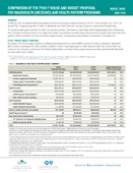
Comparison of the FY2017 House and Senate Budget Proposals for MassHealth (Medicaid) and Health Reform Programs

This brief describes the Massachusetts Senate fiscal year (FY) 2017 budget proposal for MassHealth (Medicaid) and other subsidized health coverage programs and compares it to the proposal put forth by the House. It is the third in a series of FY2017 budget briefs produced by the Massachusetts Medicaid Policy Institute (MMPI) in partnership with Health Management Associates. MMPI will be publishing budget briefs at several stages in the FY2017 budget process as proposals move through the state legislature.

Collection

Health Care and Social Service Spending and Outcomes: How Does Massachusetts Compare with Other States?

International comparisons of industrialized countries show that those with a higher ratio of social service spending relative to health care spending have better health outcomes. This finding is consistent with decades of research underscoring the importance of social, behavioral, and environmental factors on health outcomes. This report, prepared by a team led by Elizabeth Bradley and Lauren Taylor of the Yale Global Health Leadership Institute, examines the link between state-level spending on health care and social services and health behaviors and outcomes for Massachusetts compared with neighboring states and national averages.

Massachusetts Long-Term Services and Supports: Achieving a New Vision for MassHealth

This report, prepared by Manatt Health, lays out a vision for MassHealth long-term services and supports (LTSS) that is person-centered, integrated, sustainable, accountable, and actionable, providing Massachusetts policymakers with a set of options to consider when tackling some of the most intractable challenges facing the Commonwealth’s LTSS system.

The vision and policy areas addressed in the report were identified through the development of a data chart pack and supplemental interviews with consumers, government officials, community and institutional LTSS providers, health plans, and workforce representatives.

Findings from this report were featured at a Foundation event held on May 10, 2016, MassHealth Matters II: Options for Reforming Long-Term Services and Supports. Click here to learn more about the event.

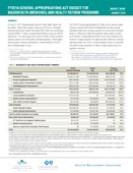
House of Representatives FY2017 Budget Proposal for MassHealth (Medicaid) and Health Reform Programs

This brief describes the Massachusetts House of Representatives fiscal year (FY) 2017 budget proposal for MassHealth (Medicaid) and other subsidized health coverage programs. It is the second in a series of FY2017 budget briefs produced by the Massachusetts Medicaid Policy Institute (MMPI) in partnership with Health Management Associates. MMPI will be publishing budget briefs at several stages in the FY2017 budget process as proposals move through the state legislature.

Collection